
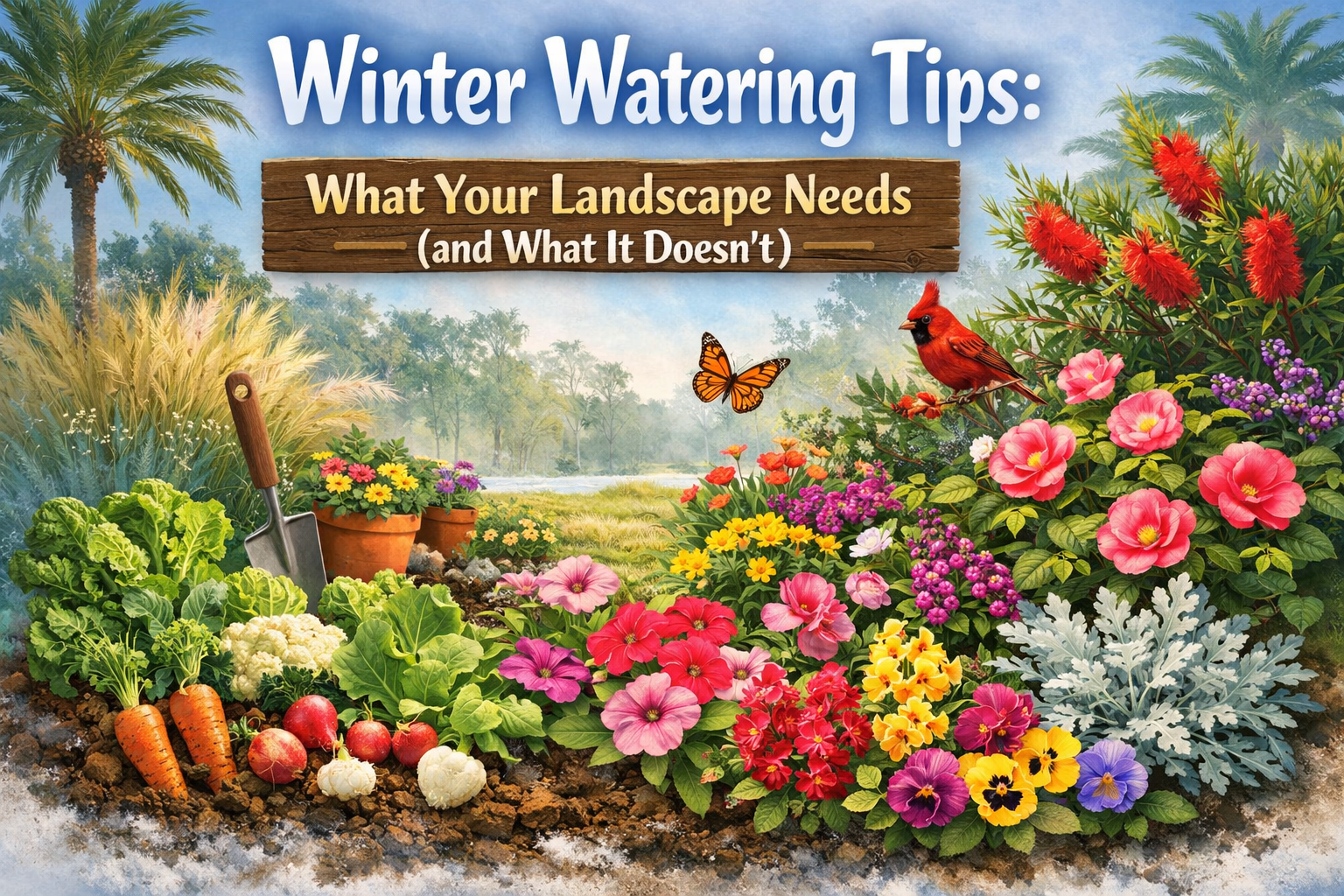
Winter Watering Tips: What Your Landscape Needs (and What It Doesn’t)
What to Plant in December in West Central Florida
Don’t let the cooler temps fool you. December is still a great time to dig in and get your hands dirty here in West Central Florida. While gardeners up north are packing up for winter, we’re just hitting our winter growing stride. December brings cooler nights and lower humidity, making it a prime time to plant everything from veggies to flowers to hardy landscape staples.
Here’s what you can safely plant right now around the Tampa Bay area (Zone 9b), including Palm Harbor, Clearwater, and beyond.
Cool-Season Vegetables
December is ideal for planting a wide variety of edible crops that thrive in cooler temps.
Some top picks:
- Leafy greens: lettuce, kale, spinach, Swiss chard, collards
- Root veggies: carrots, beets, radishes, turnips
- Cruciferous veggies: broccoli, cauliflower, cabbage, Brussels sprouts
- Herbs: cilantro, dill, parsley, chives
These cool season crops love Florida’s mild winters and can often be harvested well into spring if cared for properly.
Flowers for Winter Color
Want to brighten up your beds or containers? These blooms love December weather:
Petunias: These colorful, trumpet-shaped blooms are a Florida favorite. Petunias love sun, come in tons of colors, and can handle cooler winter temps with ease.
Snapdragons: Tall and spiky with dragon-shaped flowers, snapdragons add height and personality to garden beds. They thrive in cooler weather and bloom in bold, cheerful shades.
Pansies & violas: Small but mighty, these blooms are winter workhorses. Pansies and their daintier cousins, violas, offer bright color and delicate faces that hold up surprisingly well in cold snaps.
Dusty miller: With soft, silver-gray foliage, dusty miller is a gorgeous accent plant. It brings texture and contrast to any flower bed or container and is extremely cold-tolerant.
Dianthus: Often called “pinks,” dianthus has ruffled, fragrant blooms in pink, red, and white hues. These compact flowers love sunny spots and cool air.
Calendula: Also known as pot marigold, calendula produces bright yellow and orange blooms that not only look good but attract pollinators. It’s easy to grow and loves Florida’s mild winters.
These annuals bring vibrant color and can handle the occasional cold snap. Just keep an eye on frost warnings and cover them if temps dip too low.
Shrubs, Trees and Perennials
Now is also a great time to install hardy landscape plants. The cooler weather reduces transplant stress and gives roots time to establish before spring:
Camellias: A favorite for winter color, these classic Southern beauties burst into bloom just when everything else goes quiet. Camellias love filtered light and cool weather — perfect for brightening up winter gardens.
Azaleas: Known for their vibrant spring flowers, azaleas can be planted in winter to get a head start on root growth. They love acidic soil and partial shade, and they’re a Florida landscape favorite for a reason.
Bottlebrush: Named for its bright red, brush-like flowers, bottlebrush attracts hummingbirds and pollinators like crazy. It’s drought-tolerant, loves full sun, and adds instant tropical flair.
Hollies: With glossy green leaves and red berries, hollies bring festive color to winter landscapes. They’re hardy, low-maintenance, and great for privacy hedges or foundation plantings.
Viburnum: This versatile shrub comes in many varieties — from compact mounds to tall privacy screens. Viburnum is tough, fast-growing, and blooms with fragrant white flowers in spring.
Coontie (Florida-native cycad): This hardy, palm-like plant is actually a native cycad. Coontie is evergreen, drought-tolerant, and nearly indestructible once established — great for low-maintenance, native-friendly gardens.
Muhly Grass and other ornamental grasses: Muhly grass steals the show in fall with feathery pink plumes, but it’s attractive year-round. Most ornamental grasses are cold-hardy and add motion, texture, and color to Florida gardens.
Pro Tip: If you’re planting trees or shrubs now, you’ll give them a head start before Florida’s rainy season.
Native and Florida-Friendly Picks
December is the perfect time to plant Florida-native plants that support local pollinators and require less maintenance long-term. Some great options:
Firebush: A hardy Florida native with fiery orange-red blooms that butterflies and hummingbirds love. Firebush thrives in full sun and can handle heat, drought, and even light frosts once established.
Beautyberry: This eye-catching shrub produces clusters of vibrant purple berries in the fall and winter. Beautyberry is low-maintenance, great for wildlife, and adds a splash of color when most plants are going dormant.
Simpson’s Stopper: A tough, evergreen shrub or small tree with white flowers and orange-red berries. It’s great for hedges, attracts pollinators, and smells amazing when in bloom.
Tickseed (Coreopsis): Florida’s official state wildflower! Tickseed brings sunny yellow blooms that brighten up beds and meadows. It’s drought-tolerant, low-maintenance, and blooms for months.
Blanket flower (Gaillardia): This daisy-like native has vibrant red, orange, and yellow petals that look like a Southwest sunset. It thrives in sandy soil, attracts pollinators, and blooms nearly year-round in Florida.
If you’re not sure what thrives in your specific yard conditions, stop by the nursery! Our team can help you choose the right plants for sun, shade, soil, and space.
Final Tips
Even in December, a little extra care can go a long way. Once you’ve planted your winter flowers, veggies, or shrubs, keep them happy and healthy with a few simple finishing touches:
- Add a layer of mulch to keep roots warm and retain moisture.
- Water deeply after planting, then adjust based on rainfall.
- Watch for early frosts, especially if you’re inland or in a low-lying area.
Need help picking the best December plants? Come see us at Earthscapes Garden Room. We’ve got blooming annuals, Florida-friendly natives, and expert advice to get your garden thriving this winter.

